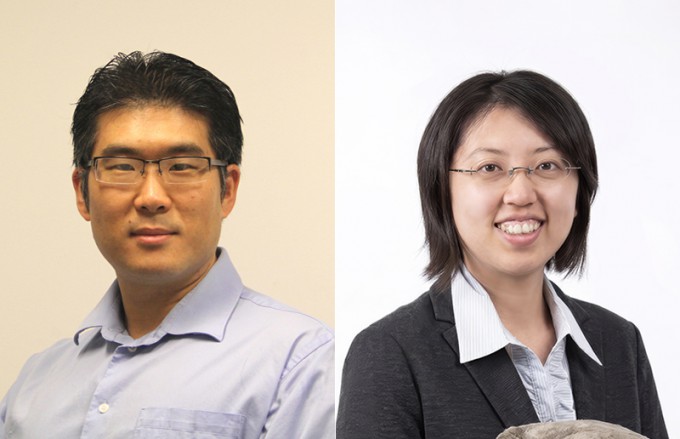
“Ig Nobel Laureates Patricia Yang and Park Seung-min Deliver First Joint Public Talk in Korea on Excrement Research” says the headline of a July 23 report by DongA Science.
The report goes on to explain:
“Dong-A Science marks its 40th anniversary with a July 25 event at Seoul National University featuring Ig Nobel Prize–winning studies on urine, feces, and smart toilets…. They are Patricia Yang, a professor at National Tsing Hua University in Taiwan who has twice won the Ig Nobel Prize for her research on the physics of urine and feces, and Park Seung-min, a professor at Nanyang Technological University in Singapore who received the 2023 Ig Nobel Prize in Public Health for his work on a “smart toilet.” The two will [give] their first-ever joint public lecture in Korea….”
Update: What Happened at the Event
DongA Science reported afterwards on details of the day:
Ig Nobel Laureates Turn Quirky Curiosity Into Human and Social Impact
From wombat poop to Joseon mummies: 40th Science Donga Curiosity Science Festival draws a full house
On the afternoon of the 25th, the main auditorium of the Global Education Center for Engineers at Seoul National University’s Gwanak Campus was packed with the heat of over 250 audience members.
This was the scene of the “Curiosity Science Festival,” held to mark the 40th anniversary of the magazine Science Donga. Rather than a place to memorize textbook knowledge, the event became a “festival of questions,” filled with the vivid voices of scientists who turned offbeat curiosity into great discoveries.
● Joyful, unconventional challenges from Ig Nobel laureates
The event opened with keynote lectures by two Ig Nobel Prize winners. The first speaker, Professor Patricia Yang of National Tsing Hua University in Taiwan, began her talk by projecting onto the screen the subject of the research that led to her 2019 Ig Nobel Prize: the cube-shaped feces of wombats.
When she introduced the image by saying, “This is not chocolate, but dice-shaped poop excreted by a wombat,” laughter broke out across the audience. As the lecture progressed, the audience found themselves drawn in, following along with Professor Yang’s curiosity.
Following Professor Yang, Professor Park Seung-min of Nanyang Technological University in Singapore took the stage and introduced a “smart toilet,” explaining with actual defecation analysis footage how everyday excreta can be turned into valuable health data.
The smart toilet he developed uses simple sensors to analyze urine and stool conditions as accurately as a trained medical expert. In 2023, Professor Park received an Ig Nobel Prize for this research. He emphasized the value of curiosity that breaks fixed ideas, saying, “The most important answers can be hidden in the places we consider trivial or even dirty.”
Right after their talks, the first session wrapped up with an intense dialogue between the two speakers. They shared behind-the-scenes stories of their Ig Nobel Prize journeys and satisfied the audience’s diverse curiosities.
When asked about the Ig Nobel Prize money, Professor Park answered, “I received 10 trillion Zimbabwean dollars,” adding, “It was money no better than tissue paper, but the prize itself was worth far more than money.”
Recalling how she felt when she first received the Ig Nobel Prize, Professor Yang said, “People around me teased me a lot at first for studying pee and poop,” but added, “Thanks to the fame, I received several good job offers.” ….